
Custom Optical Scanning
& Autofocus Systems
Engineered for Your Application
OFH designs and builds custom voice-coil driven optical systems: closed-loop autofocusing heads for laser processing, resonant mirror scanners for OCT, and 2D beam deflectors for imaging and metrology. Complete integrated systems or individual subsystems.
- Voice-Coil Actuators
- Autofocus Systems
- 2D Beam Scanners
We've Built These. We Can Build Yours.
Two distinct systems, one for precision laser processing, one for OCT beam scanning.
Both built on the same core expertise: voice-coil actuation, leaf-spring suspension, and custom opto-mechanical integration.
Laser Processing
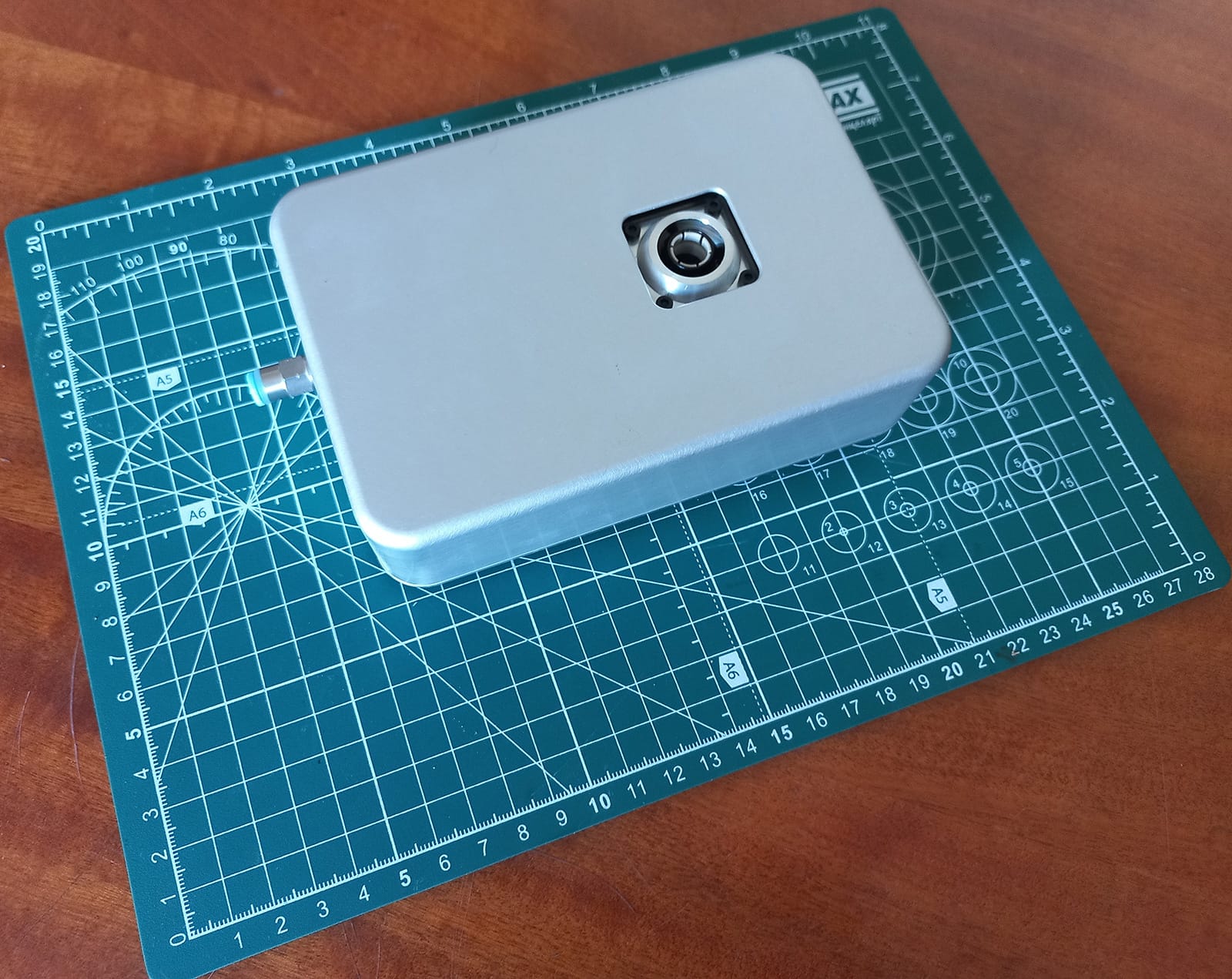
Closed-Loop Autofocusing Optical Head
Complete opto mechanical system for sub-micron focal tracking on moving, non-planar surfaces. Integrated custom voice-coil actuator, leaf-spring suspension, off-axis AF sensor with dual-element segmented photodiode, beam-shaping optics, and digital PID servo — in a single cleanroom-ready block, built around a 0.61 NA writing lens.
OCT / Biomedical Imaging
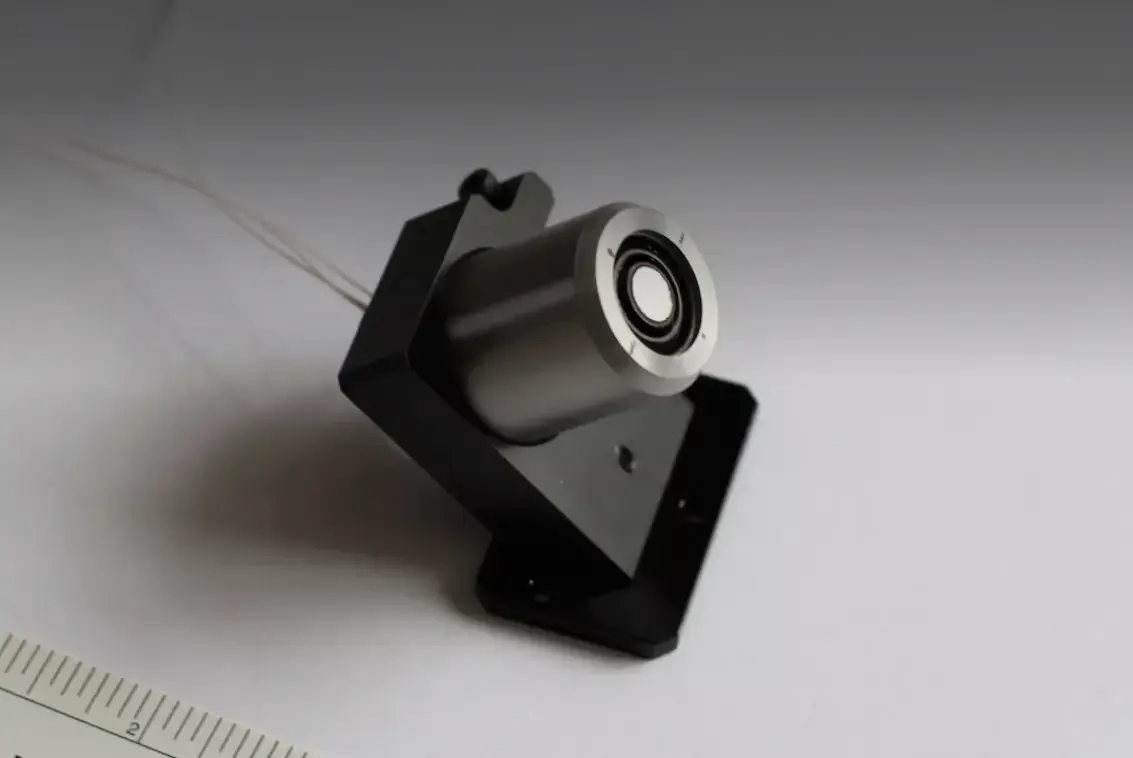
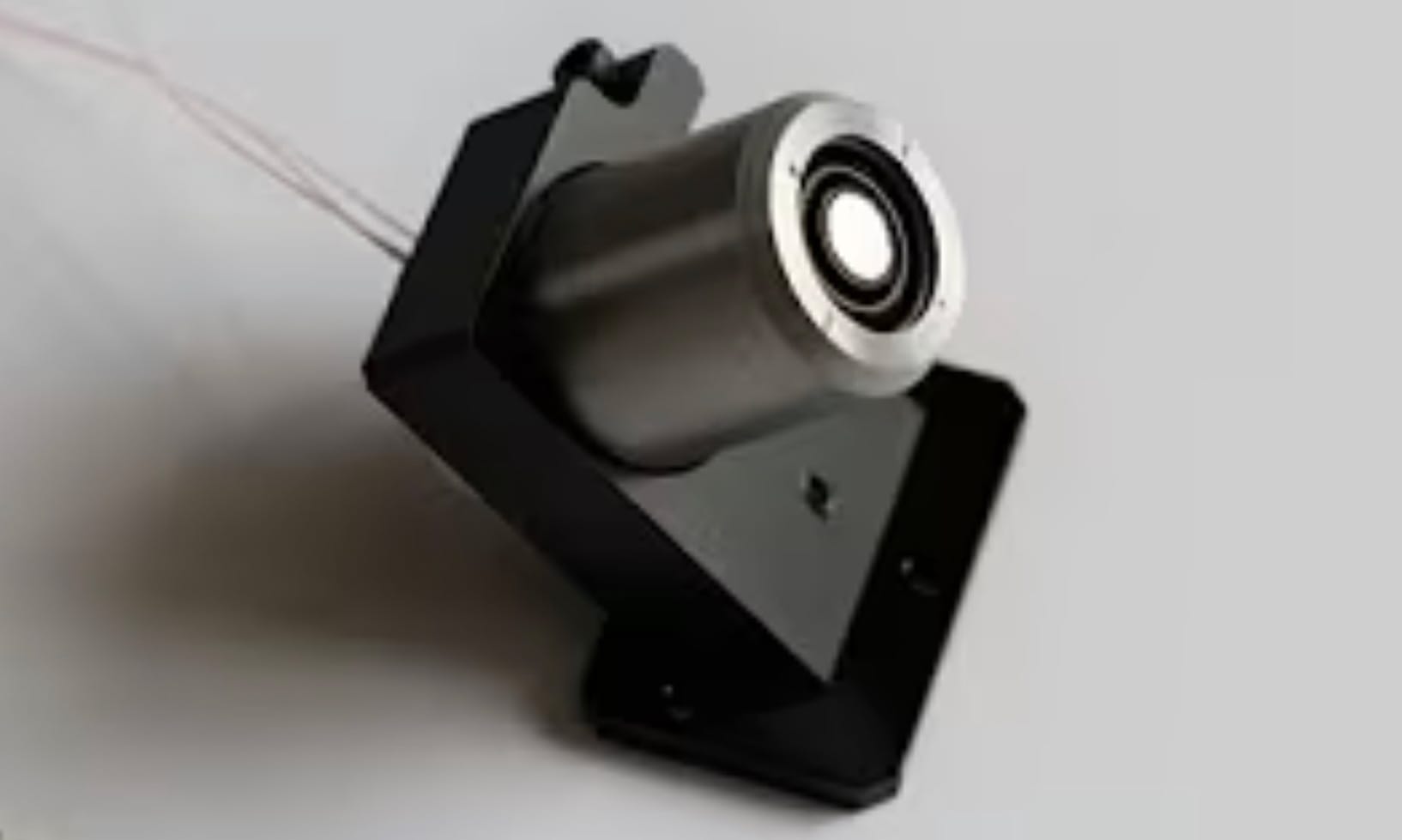
Resonant Mirror Actuator for OCT Beam Scanning
Custom voice-coil driven mirror actuator for an OCT portable system, delivering sinusoidal beam deflection at a tunable resonant frequency. Designed for optical path modulation with a partial mirror in the reference arm. Beryllium-copper leaf springs with adjustable working length for frequency tuning. Built and qualified by OFH before delivery.
Complete Systems or Any Subsystem in Isolation
Every engagement is scoped to what you need. Some clients come to us for an integrated system. Others need
a single subsystem — a specific actuator, a custom suspension, or a 2D scanner — to plug into their existing platform.
Complete System
Integrated Autofocusing Optical Head
The complete closed-loop head, built to your wavelength, NA, bandwidth and envelope.
Complete System
Resonant Mirror Scanner for OCT
Resonant voice-coil mirror scanner, with the resonant frequency set to your system at assembly.
Subsystem
Voice-Coil Actuator (VCM)
Single-axis electromagnetic drive for fast, precise linear or angular positioning of rather heavy moving objects. Used wherever you need high-bandwidth force control without stiction, backlash, or wear. Can be configured for resonant or non-resonant operation depending on application.
Subsystem
Leaf-Spring Flexure Suspension
Parallelogram beryllium-copper leaf-spring suspension for frictionless, repeatable linear guidance. No lubrication, no wear, no stiction. Own suspension frequency spectrum is set by spring mechanical design — tunable at assembly for prototype flexibility.
Subsystem
Autofocus Sensor & Servo Controller
Off-axis focus error detection using a segmented photodiode (quadrant or dual-element), generating sum and differential signals for S-curve based focus error discrimination. Paired with a digital PID servo controller driving the VCM.
Subsystem
2D Angular Beam Scanner
Dual-axis mirror scanner for 2D beam deflection over a target field. OFH has designed and modeled 2D VCM scanners for OCT systems with scan fields up to 16 × 12 mm. Can be paired with F-theta or telecentric scan lenses for flat-field imaging.
How These Systems Work
If you're evaluating whether OFH can solve your problem, these are the underlying technologies we work in.
Voice-Coil Actuator
Electromagnetic Linear & Angular Drive
A voice-coil actuator (VCM) generates force by passing current through a coil in a static magnetic field produced by high effective NdFeB and SmCo magnets. Special dampers provide the flatter-free movement. No gears, no screws, no contact — just smooth, bidirectional force proportional to current. This makes VCMs ideal for high-frequency, high-precision motion where friction or backlash would introduce error. OFH designs both the magnetic circuit and the coil geometry for your force, stroke, and bandwidth target.
Leaf-Spring Suspension
Flexure-Based Frictionless Guidance
A parallelogram leaf-spring suspension guides the moving part of an actuator with zero friction and zero wear. The resonant frequency is determined by spring stiffness and moving mass — OFH models and tunes this to match your operating frequency. Beryllium-copper springs offer the best fatigue life and stiffness-to-mass ratio for optical actuator applications. Spring working length is tunable at assembly for prototype flexibility.
Segmented Photodiode AF
Quadrant & Dual-Element Focus Error Detection
Autofocus systems use a segmented photodiode — quadrant (four-quadrant) or dual-element — to detect the focus error signal. An off-axis probe beam is reflected from the target surface; its position on the detector shifts with defocus, generating an S-curve error signal. The sum signal (A+B) gives intensity; the differential signal (A−B) gives focus error. OFH designs both the optics and the signal processing electronics.
F-Theta & Scan Lenses
Flat-Field Beam Scanning Optics
A galvo or VCM scanner deflects a beam angularly, but without a scan lens, the focused spot traces a curved arc — not a flat field. F-theta lenses convert angular deflection to linear scan position, providing a flat image field and constant spot velocity. For OCT and confocal applications, telecentric scan lenses (like the Thorlabs LSM series) maintain constant beam angle at the sample. OFH models the full scan system in Zemax, including scan lens, field curvature, and spot size across the field.
Closed-Loop Servo
Digital PID Control for Optical Actuators
A closed-loop servo reads the position or focus error from a sensor, computes a correction via a PID (proportional-integral-derivative) controller, and drives the VCM coil current to minimize error. The digital PID controller provides the easy adaptability of servo system to your specific tracking system. The servo bandwidth — how fast the loop can respond — is limited by the actuator’s mechanical resonances. OFH designs the full control loop: sensor, signal conditioning, digital PID implementation, and VCM driver, matched to your required tracking accuracy and surface dynamics.
Resonant vs. Non-Resonant Actuator Operation
One of the first questions in any OCT scanner or mirror actuator design. Both approaches are feasible. The
right choice depends on your power budget, frequency stability requirements, and system complexity tolerance.
Where OFH Optical Scanning Systems Are Used
If your application requires a focused beam to track, scan, or write on a surface — at speed,
at sub-micron accuracy, or in a compact form factor — this is the class of system OFH builds.
OCT Lateral Scanning
2D scanners that sweep the beam laterally across tissue to build the B-scan. OFH has modeled 2D scan systems for fingerprint-scale fields and can build the actuators and drive electronics to match.
Laser Marking & Engraving
Closed-loop autofocus heads that maintain focus on curved, tilted, or mechanically imperfect surfaces without stopping the scan — sub-micron tracking accuracy at 1.2 kHz servo bandwidth.
Sub-Surface & Volumetric Laser Writing
High-NA writing heads with active Z-focus control for writing patterns inside a volume — holographic data storage, 3D microstructure fabrication, two-photon polymerization.
Semiconductor Inspection & Metrology
Non-contact surface height mapping and defect detection across large-area substrates. Active focus maintenance for confocal and structured-light systems scanning wafers and panels.
Confocal & Scanning Microscopy
High-bandwidth focus and beam-steering actuators for confocal, two-photon, and light-sheet microscopy. OFH models the full optical train — scanner, scan lens, objective — in Zemax.
Laser Material Processing
Focus-controlled write heads for annealing, scribing, trimming, and surface modification on non-flat substrates. Microelectronic component trimming and tuning with sub-micron focal control.
OCT Reference Arm Modulation
Precise optical path length modulation in time-domain and swept-source OCT systems. Resonant or non-resonant operation — OFH can model and build both, and advise which is appropriate for your system.
Holographic Data Storage
Precision optical pickup actuators for next-generation holographic and archival optical storage media — a domain where OFH has deep historical experience from the data storage era.
Adaptive Optics & Interferometry
Fast tip/tilt and piston correction elements for wavefront correction systems. Phase modulation via controlled mirror displacement in interferometric measurement setups.
You Define the Requirements. We Engineer to Them.
These are the inputs you bring to OFH. We size, model, and build the system around your numbers, not a fixed catalog.
Operating Frequency
Resonant or non-resonant. Set by your scan rate, surface dynamics, or OCT A-scan frequency.
Wavelength
Writing and/or sensing wavelength. 850 nm typical for OCT; 1550 nm for telecom-band laser processing.
Scan Field / Stroke
Mirror stroke or linear travel, driven by your surface runout, scan field size, or OCT depth range.
Focus Accuracy
Determined by your spot size requirement, depth-of-focus budget, and surface non-planarity.
Form Factor
Footprint, beam height, mass, mounting interface — designed to fit your optical bench or OEM housing.
Environment
Material selection, sealing, and power constraints matched to your operating environment and duty cycle.
Other Systems We've Designed and Built
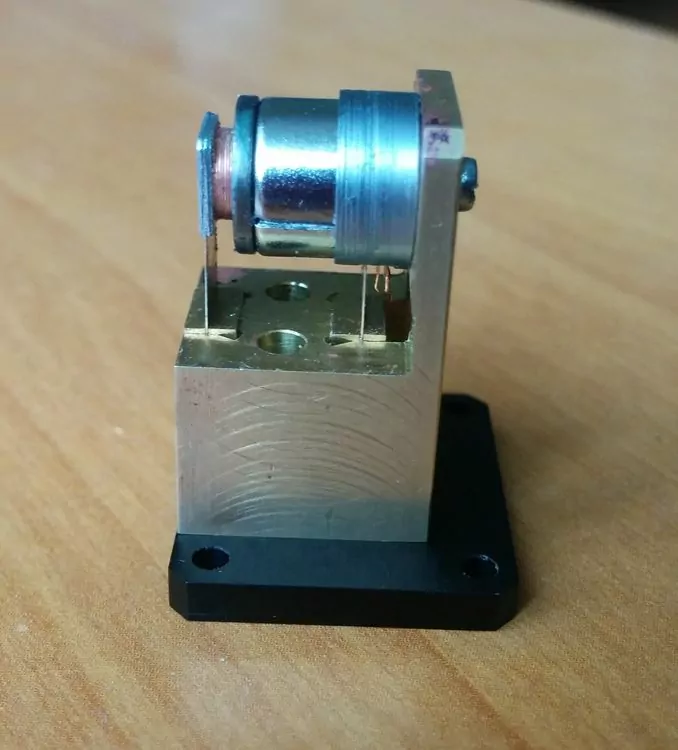
Linear Scanning Mirror
A vibrating mirror that modulates optical path length for OCT and interferometry. Resonance tunable from 200 to 500 Hz, 5–8 mm aperture, sub-10 arc-second deflection accuracy, in a 16-gram package.
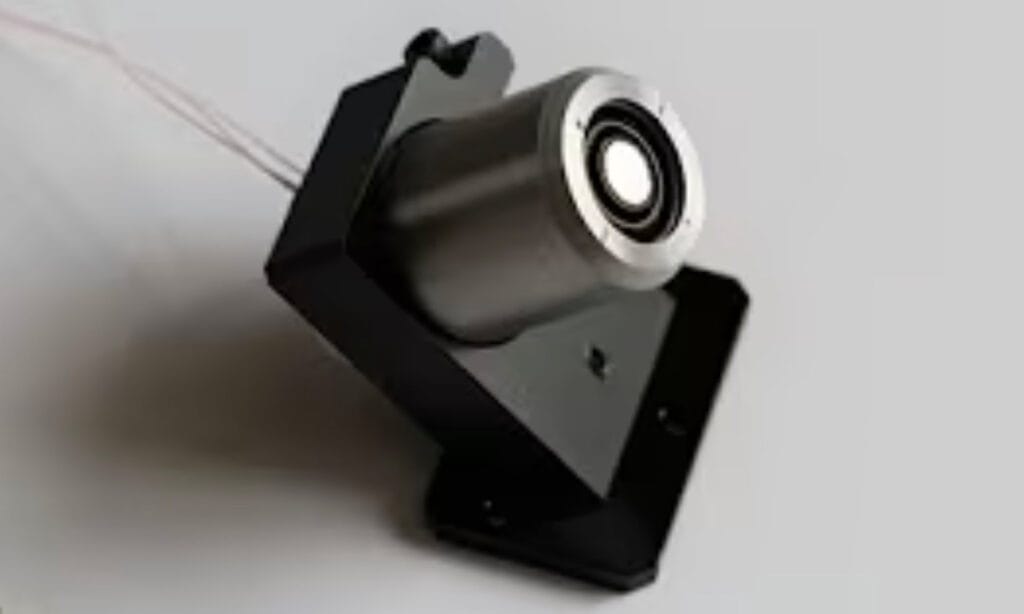
Dual Axis Scanning Mirror
Two-axis deflection from a single mirror in a 33.5 × 20 mm cylinder. ±15° scan angle, 5.5 mm clear aperture, open or closed loop, proven past two million cycles in laser wobble welding and OCT.
3D Depth Mapping
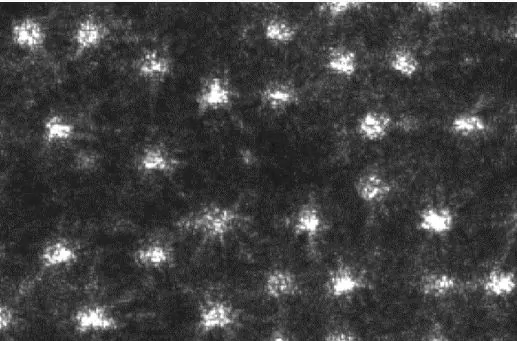
A pattern projector and an astigmatic lens turn projected spots into ellipses whose shape encodes distance. No intensity or phase measurement, so it resists multi-path interference and changing ambient light.
Custom Optical Scanning & Autofocus Systems FAQ
Can OFH build a complete system, or just the subsystem I need?
Both. Some clients come to us for a fully integrated system — like a closed-loop autofocusing optical head with the actuator, suspension, AF sensor, beam-shaping optics, and digital servo in a single block. Others need a single subsystem — a voice-coil actuator, a leaf-spring flexure suspension, an autofocus sensor with servo controller, or a 2D angular beam scanner — engineered to plug into their existing platform.
Should my scanner run in resonant or non-resonant mode?
Resonant operation offers roughly 10× lower power consumption and frequency stability defined by the spring-mass mechanics rather than electronics, but it requires precise frequency tuning at assembly and a mirror position sensor for amplitude control. Non-resonant operation is simpler to build and lets you set and change the frequency electronically, at the cost of higher power consumption and stability that depends on the drive electronics. OFH has built both and can advise based on your power budget and frequency stability requirements.
What performance has OFH actually demonstrated?
Our completed systems include a closed-loop autofocusing optical head with ±2.5 µm focus accuracy over a ±2.5 mm tracking range at 1.2 kHz servo bandwidth, and a resonant mirror actuator for a portable OCT system delivering ±20 µm mirror stroke at 380 Hz with a ±30 Hz frequency tuning range.
Which parameters can be customized?
You define the requirements and we engineer to them: operating frequency from 10 Hz to 2+ kHz, wavelengths from 400 nm to 1600 nm, strokes from ±20 µm to ±5 mm and beyond, focus accuracy from sub-micron to tens of microns, plus your form factor, mounting interface, and operating environment — lab, cleanroom, or portable.
What applications are these systems used for?
OCT beam scanning and reference-arm modulation, laser marking and engraving on curved or tilted surfaces, sub-surface and volumetric laser writing, semiconductor inspection and metrology, confocal and scanning microscopy, laser material processing, holographic data storage, and adaptive optics.
Do you model the system before building it?
Yes. Zemax modeling of the full scan system — scanner, scan lens, field curvature, and spot size across the field — is included, and we review feasibility at no charge before you commit to a project.
Why voice-coil actuation instead of gears or screws?
A voice-coil actuator produces smooth, bidirectional force proportional to current, with no gears, screws, or contact — meaning no stiction, backlash, or wear. Combined with a beryllium-copper leaf-spring suspension, it delivers frictionless, repeatable motion that is ideal for high-frequency, high-precision optical positioning.