
9 creatures with amazing ‘optical systems’
9 Creatures with Amazing Optical Systems
A tour of nature’s most impressive optical engineering, from the mantis shrimp’s 12 color receptors and infrared/UV/polarized vision to the ogre-faced spider’s disposable night-vision membranes. Nine animals whose eyes put human visual capabilities in perspective.
The future of mobile optics, Apple patent filings

The Future of Mobile Optics
A look at Apple patent filings that reveal potential directions for smartphone camera design, including periscope-style folded optical paths, in-body zoom using movable lens groups, mirror-based image stabilization, and beam-splitting prisms for multi-sensor capture. Discusses implications for lens attachment designers as camera architectures evolve.
Super Cool Optics Startups: Latest Updates and New Additions
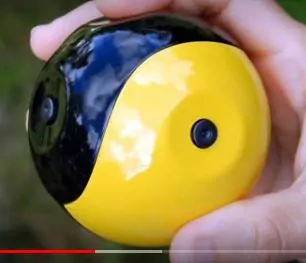
Our original Super Cool Optics Startups list’s popularity prompted an update to include six more we wanted to share with you. Exciting New Additions to the Super Cool Optics Startups List Organic Robotics Their stretchable smart fabrics deliver optically based accurate motion capture and pressure sensing at the speed of light with practical uses in […]
Understanding K Correlation in Optical Design: Managing Stray Light and Light Scattering

In this article, we will explore a critical aspect of optical design: the K correlation, and how it plays a pivotal role in managing issues such as stray light and light scattering in optical systems, and we will discuss the Bidirectional Scattering Distribution Function (BSDF) in greater detail. The Significance of K Correlation In optical […]
5 things to know about refractive index
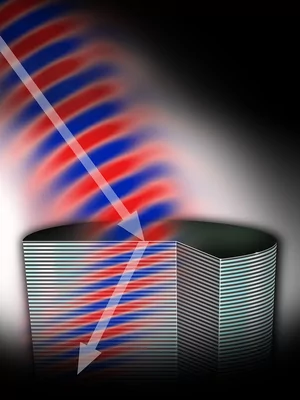
Introduction The refractive index is one of the basic concepts in optical sciences. Same as volume, and density, the refractive index is a fundamental property of all materials. However, not only materials that are used in optics have a refractive index. For example, the refractive index of water is 1.33, and the refractive index of […]
Why spot and beam uniformity are not always equal
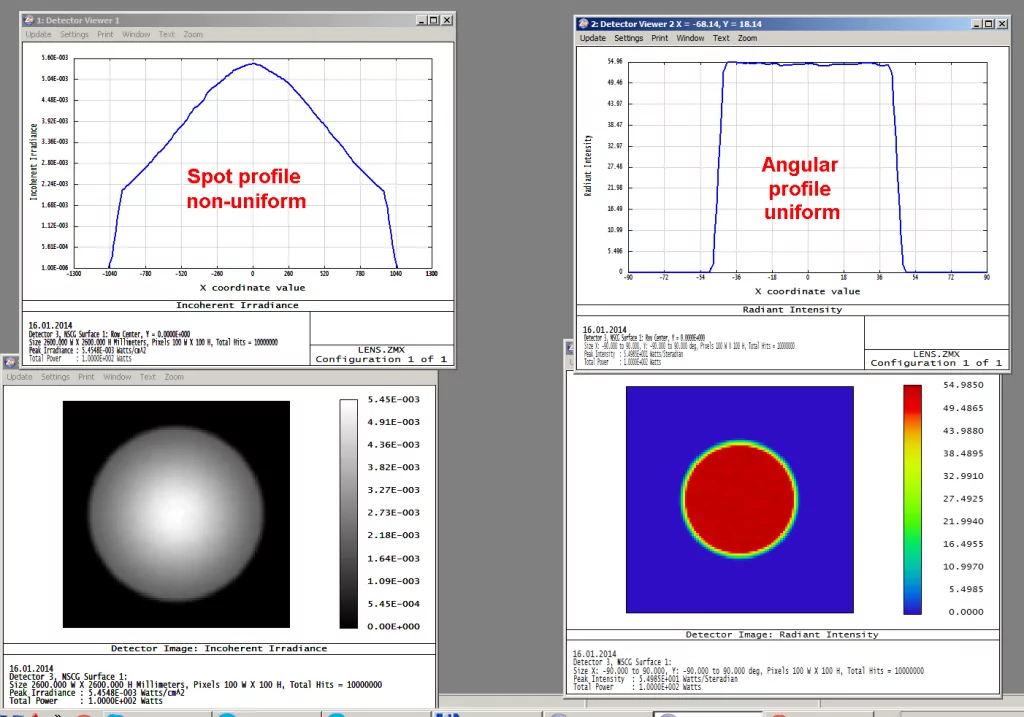
For many LED optic projects, a spot size and beam angle can be specified with a single uniformity value. In cases of beam angles above 30 degrees, things get tricky. Please see the images below for an explanation. If you prefer to understand the math… Illuminance is changed by formula E=(I/r*r)*cos(A), where E – illuminance, […]